

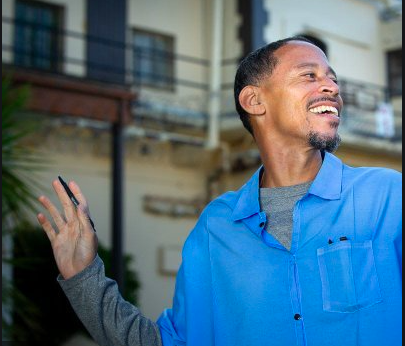
Co-owner of Empowerment Avenue Rahsaan Thomas outside the San Quentin Prison. (Picture courtesy Empowerment Avenue Twitter)
Empowerment Avenue was created to help incarcerated people get their work published. The program establishes the framework to facilitate and support inside-outside partnerships, reducing the barriers to collaborating and compensating imprisoned people. Program organizer and freelance writer Emily Nonko hopes the program will bring a positive change in incarcerated people’s lives. One main goal is to ensure incarcerated folks are paid fairly for their labor in the creative economy.
Nonko said that outside organizations and individuals often lack the organizational framework and relationships required to collaborate with and hire incarcerated people.
“Likewise, incarcerated people lack knowledge of and access to outside networks and opportunities,” she said. “Even when incarcerated people are aware of existing opportunities, they often lack the support needed to comply with common requirements such as digital submission, e-mail communication, and compressed deadlines.”
Empowerment Avenue seeks to support writers, artists, musicians, advocates, thinkers, and other creative people. One of those writers the organization supports is Rahsaan Thomas, founder of Empowerment Avenue.
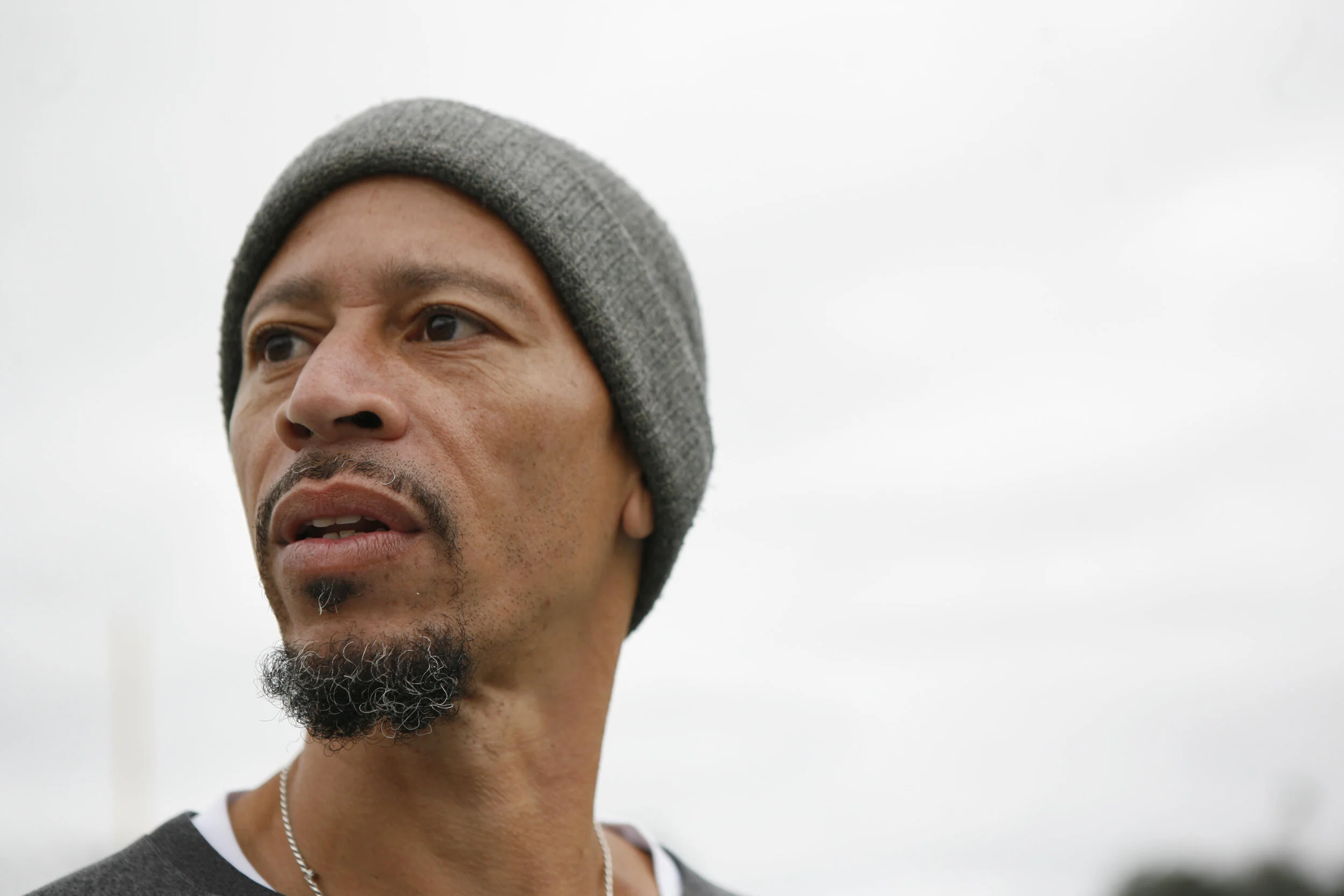
Co-owner of Empowerment Avenue Rahsaan Thomas has made $2,400 in less than three months from the program. (Picture courtesy of Eddie Herena)
Thomas, who is serving time at San Quentin Prison, has created forums and avenues for incarcerated artists for years. He co-hosts the podcast Ear Hustle, where he talks about the criminal justice system and the true-life stories in prison. He also co-founded Prison Renaissance, a nonprofit to empower incarcerated artists.
Nonko and Thomas met while Nonko worked with incarcerated writers at San Quentin Prison. The idea for the program initially came from Thomas.
“I believe that I need Empowerment Avenue and so do thousands of other incarcerated artists,” Thomas said. “Emily had similar ideas, so I sent her my grant proposal. She loved it and turned my vision into a reality beyond my dreams.”
The two visionaries wanted to establish a program that would support opportunities in the creative economy for incarcerated people, with compensation priority within the jail.
“Rahsaan is a visionary who is also a public figure through his writing and advocacy work,” Nonko said. “I’m more logistics and detail-oriented, so I helped create some of the frameworks that supported the vision. We balance each other very well as far as our strengths. Rahsaan has the skill of breaking down those prison walls to create inside and outside partnerships. Being a part of that has been life-changing for me.”
Through Empowerment Avenue, Nonko and Thomas created a one-on-one volunteer partnership model. They helped incarcerated writers get published in multiple publications, including Washington Post, The New Republic, Jewish Currents, The Progressive and Business Insider. These writers get paid directly and have earned about $6,900 in the first seven months of creating the program. “Empowerment is making a difference,” Thomas said.
Empowerment Avenue hopes to build innovative and professional relationships, gain relevant knowledge and skills and collaborate with communities beyond bars. Additionally, the program wants to create internal fellowships to provide grants for incarcerated artists, writers, speakers, and educators and curate Prison Renaissance events to feature participants’ works.
Empowerment Avenue is one of many programs that are publishing incarcerated people’s art. Connecticut’s Aldrich Contemporary Art Museum has a gallery representing work by 34 presently and formerly incarcerated artists. The Pencil is a Key: Drawings by Incarcerated Artists is a published book filled with 140 drawings by imprisoned artists. The PEN America Prison Writing Program publishes articles and stories written by incarcerated people.
The two entrepreneurs want to continue highlighting writers in prison and supply them in every publication.
“Too often we’ve accepted narratives and journalism that feed directly into the injustice of mass incarceration,” Nonko said. “I believe it’s time for outside journalists to make authentic space for incarcerated writers. I’d like the power structures in media to shift, essentially.”
The organization wants to continue to build a creative economy based on positive partnerships and to help chip away at the prison industrial complex. Thomas hopes that the program stops reoffences and leads to abolition.
“I hope to inspire movements and spark conversations that lead to stopping crime without violence or incarceration,” Thomas said. “I want to better the world through art and proximity.”
Lean more about Empowerment Avenue by clicking here.