

Celebrating Black Genius
The Lewis Latimer Fellowship, also referred to as “The Black Genius Fellowship”, is an initiative that celebrates Black innovation at the intersection of technology, diplomacy, and global problem-solving. Backed by Breakthrough Energy Ventures, the climate-focused venture capital firm founded by Bill Gates, the fellowship is based on the legacy of the Black inventor Lewis H. Latimer who helped revolutionize the lightbulb. According to a press release, the fellowship is reclaiming and redefining Black genius for the future.
The year-long program runs from January to January and features cohorts of entrepreneurs, diplomats, scientists, and strategists working across sectors to shape solutions to today’s global challenges.
Throughout the program, fellows are connected with mentors, methods, and mindsets to help them bring their solutions to life. The fellows meet monthly for training on how to pitch their ideas anytime, anywhere. Fellows don’t receive direct funding but are connected to potential investors.
2025 Lewis Latimer Fellows
The Lewis Latimer Fellowship is currently hosting its fourth cohort, known as the “Great 8,” each selected for their groundbreaking work shaping the future.
- Ranulfo (Randy) Allen, PhD – The Future of Material Science
- Aaron Fitzgerald – The Future of Sustainability
- Demetrius Harris – The Future of Aviation
- Lauren Ruffin – The Future of World Building
- Jason Teeters – The Future of Leadership
- Titus Walker – The Future of Gamification
- Cortney Woodruff – The Future of Education
- Alexandria J. Maloney, MPA – The Future of Diplomacy
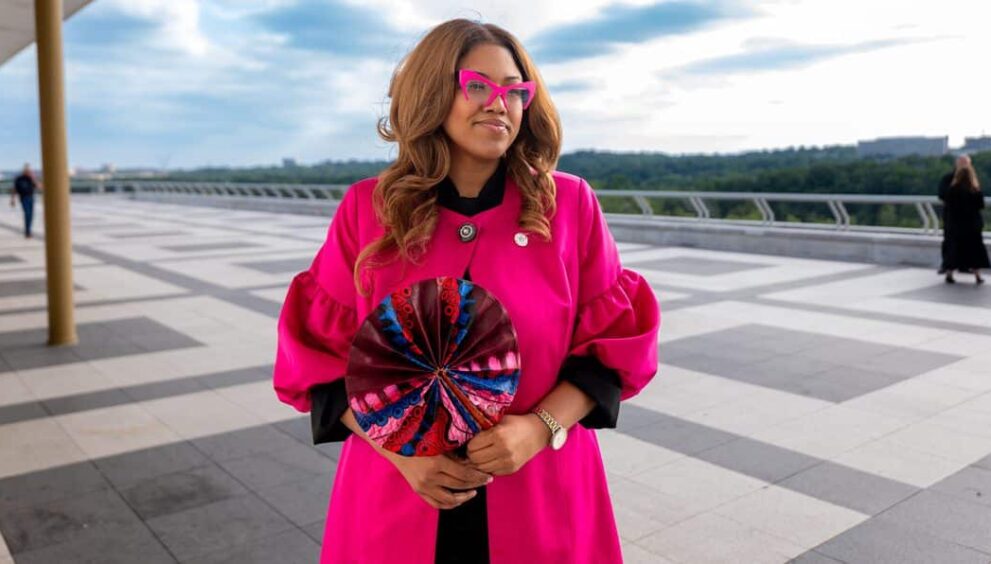
Meet A Fellow
Maloney is one of the 2025 Lewis Latimer Fellows. Her life’s work centers on creating inclusivity in foreign affairs, and that’s exactly what she’ll be focusing on in the fellowship, specifically the future of diplomacy. Maloney noted that every industry has an international component, like education, where students study abroad making it essential for everyone to have access to these global conversations.
“There are institutions, organizations, and individuals who are making decisions that are impacting our communities and we should be at the table,” said Maloney.
For the fellowship, Maloney’s idea is to create a global institute that prepares the next generation of leaders to tackle today’s biggest challenges like climate change, poverty, world hunger, and war. She said it’s more than just focusing on what technologies can be used but also teaching the students how to navigate human conflict because many issues we face are man-made.
“That’s what makes us human, interaction,” said Maloney. “…AI and technology can’t solve all things.”
The students would produce a capstone project where they identify challenges and receive help along the way to create their solutions, similar to the Lewis Latimer Fellowship.
Outside of the fellowship, Maloney is the President of Black Professionals in International Affairs. The nonprofit has been around since 1989 to increase the involvement of Black individuals and those of African descent in international affairs.
She is also the director at the Charles F. Kettering Foundation, a visiting lecturer at Cornell University Brooks Policy School, and a senior fellow with the Atlantic Council’s Africa Center. Maloney has been recognized among the Top 100 Most Influential People of African Descent and named a Forbes 50 Champion.
“Don’t let anyone hold the pen to your life,” she said. “Don’t let anyone write your story.”